
Every year, as exams end and temperatures rise, parents begin the familiar search for the right summer camp. The options are endless — art workshops, dance classes, robotics labs, drama clubs, and activity-based camps promising “non-stop fun.” While these programs certainly keep children occupied, many parents quietly wonder: Is my child truly gaining something meaningful from this experience?
In a world full of distractions, children don’t just need entertainment — they need exposure to real-life skills, resilience, and confidence-building experiences. Summer vacations are one of the few opportunities when learning can happen beyond textbooks and screens.
What if a summer camp could be joyful and adventurous, yet deeply practical at the same time? What if children returned home not only with memories, but with skills that could one day help them navigate real-life challenges — or even save a life?
Let’s explore why value-driven camps are becoming the smarter choice for today’s parents.
The Problem with Most Summer Camps Today
Many summer programs focus heavily on keeping children busy. Activities like crafts, dance routines, and themed entertainment weeks can be enjoyable. But in most cases:
- The learning is short-term.
- The skills are hobby-based rather than life-based.
- The experience doesn’t stretch children beyond their comfort zone.
There’s nothing wrong with creative learning. However, if a child is truly passionate about art or dance, they often pursue it throughout the year. Summer becomes an extension of what they already know — not an opportunity to develop something new.
More importantly, today’s children are growing up in an environment that is:
- Increasingly dependent on technology
- Less connected to nature
- More structured and supervised than ever
This often leaves little room for independent thinking, problem-solving, and physical resilience.
Why Life Skills Should Be the Core of a Summer Camp
A meaningful summer camp should equip children with abilities that stay with them for life. These include:
1. Survival Awareness
Basic survival knowledge — such as building shelter, understanding fire safety, or navigating natural terrain — builds more than practical ability. It develops:
- Calmness in unfamiliar situations
- Resourcefulness
- Decision-making under pressure
Children learn that they are capable of handling more than they imagined.
2. First Aid and Emergency Response
Imagine a child who knows how to respond during a minor accident or natural emergency. First aid training:
- Encourages responsibility
- Reduces panic in crisis situations
- Builds leadership qualities
Even basic knowledge of wound care or disaster response can make a powerful difference.
3. Physical Confidence Through Adventure
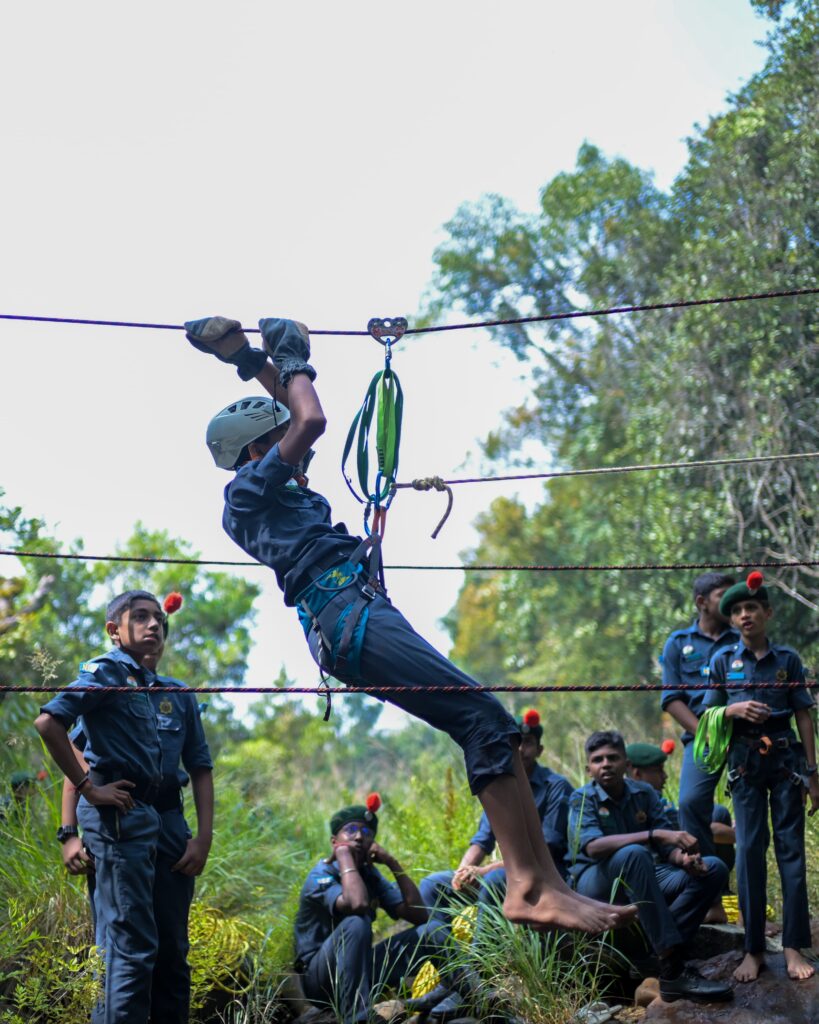
Activities like trekking, rappelling, and ziplining are not about thrill alone. They teach:
- Risk assessment
- Trust in instructors and teammates
- Courage in the face of fear
When children climb a rock face or complete a challenging trail, they are also climbing over internal barriers.
4. Mindfulness in Nature
Modern childhood is overstimulated. Constant screens and structured schedules leave little room for quiet reflection.
Nature-based mindfulness practices help children:
- Improve focus
- Reduce anxiety
- Develop emotional balance
Studies consistently show that time spent in natural environments improves mental well-being and cognitive performance in children.
The Power of Learning in the Outdoors
When children step out of classrooms and into forests or mountain terrains, learning becomes experiential.
In natural settings, children:
- Work in teams to build shelters
- Understand flora and fauna firsthand
- Learn essential rope knots with real application
- Practice navigation rather than reading about it
These experiences create neural connections that are deeper and longer-lasting than passive learning.
Outdoor environments also naturally encourage:
- Communication skills
- Leadership development
- Empathy and cooperation
In small group settings, children are seen, guided, and supported more closely.
What Parents Should Look for in a Value-Based Summer Camp
If you’re searching for a purposeful summer camp, here are practical criteria to evaluate:
Safety Structure
- Small batch sizes
- Certified instructors
- Clear supervision protocols
- Defined emergency response systems
Safety should never be assumed — it should be clearly communicated.
Skill-Based Curriculum
Look for camps that offer:
- Survival techniques
- First aid training
- Physical endurance activities
- Emotional resilience building
Avoid camps where the schedule is primarily entertainment-driven.
Exposure to Nature
Research shows that children who spend more time outdoors develop:
- Better problem-solving skills
- Improved emotional regulation
- Higher physical stamina
Camps situated in natural landscapes offer immersive learning that indoor environments cannot replicate.
A Different Approach: Bowline Adventure Summer Camp
One example of a purpose-driven program is Bowline Adventure Summer Camp.
Hosted at the Bowline Adventure Campsite in the Western Ghats (ages 8–15), this camp integrates adventure with life skills training in a structured and joyful environment.
Instead of focusing purely on entertainment, the program includes:
- Survival skills: shelter making, fire safety, self-defense, navigation
- First aid and disaster response training
- Essential rope knots
- Trekking, zipline, and rappelling base techniques
- Introduction to flora and fauna of the Western Ghats
- Mindfulness practices in nature
Importantly, safety remains a top priority, with small groups, certified facilitators, and constant supervision.
The goal isn’t to create temporary excitement — it’s to nurture confidence, courage, and competence.
How Life Skills Build Long-Term Confidence
Children gain confidence not from praise alone, but from overcoming difficulty.
When a child:
- Ties a knot correctly after multiple attempts
- Completes a trek despite fatigue
- Responds calmly in a simulated emergency
- Works as part of a team to solve a challenge
They begin to internalize a powerful message:
“I can handle this.”
This internal shift shapes how they approach academics, friendships, and future challenges.
Confidence built through experience is far more durable than confidence built through validation.
Joy and Discipline Can Coexist
A common misconception is that life skills training must be serious or rigid.
In reality, children learn best when:
- The environment feels safe
- The learning is hands-on
- Activities are interactive
- Instructors are encouraging
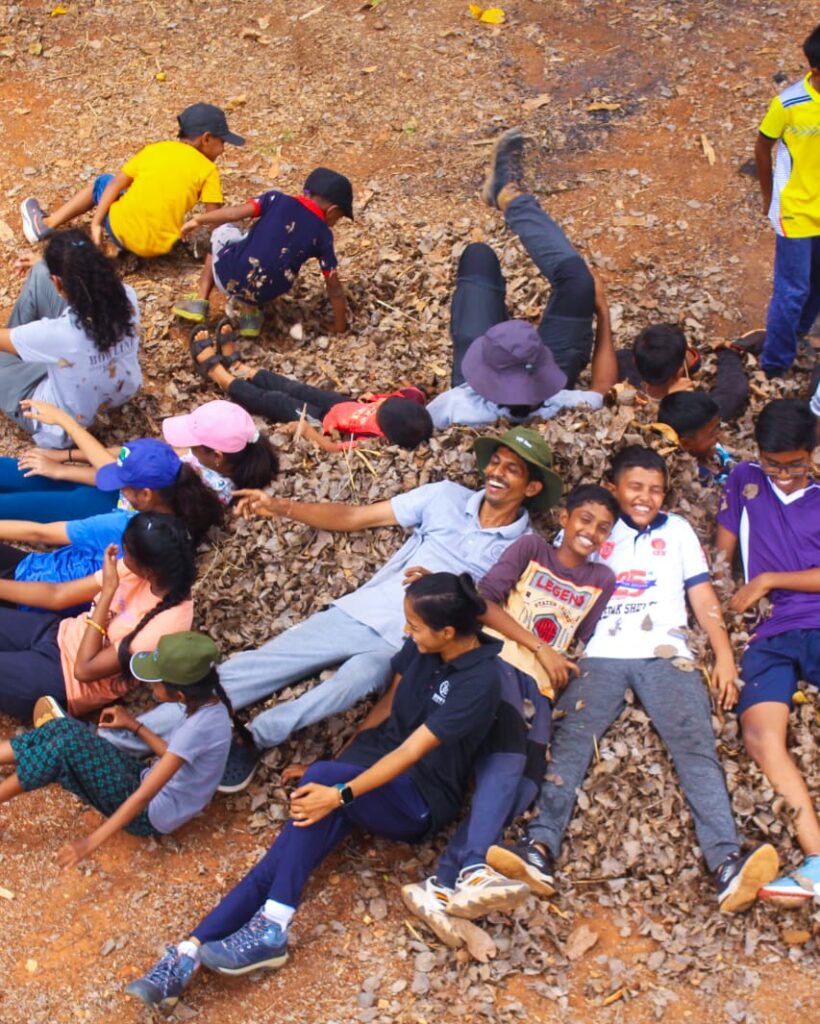
Skill-based camps can still be filled with laughter, bonding, and adventure. The difference lies in intention.
Entertainment may create memories.
Skill-building creates transformation.
Why This Matters More Than Ever
Today’s children are growing up in a rapidly changing world. Uncertainty, environmental challenges, and technological dependence are shaping the future.
Equipping children with:
- Practical survival awareness
- Emotional resilience
- Teamwork skills
- Crisis response knowledge
Is no longer optional — it is foundational.
Summer is not just a break from school. It is an opportunity to prepare children for life beyond school.
Choosing the Right Summer Camp for Your Child
Before enrolling your child anywhere, ask yourself:
- Will my child learn something truly useful?
- Will this experience build confidence?
- Is the program structured around growth, not just fun?
- Are safety and mentorship clearly prioritized?
A well-designed summer camp can be a turning point in a child’s development.
Conclusion: A Summer That Builds More Than Memories
Summer camps should be more than a seasonal activity. They should be a space where children grow stronger — physically, emotionally, and mentally.
Entertainment has its place. But real growth comes from challenge, responsibility, and hands-on learning.
Programs like Bowline Adventure Summer Camp 2026 show that joy and life skills can coexist beautifully. When children return home with confidence, resilience, and practical knowledge, the impact extends far beyond a few summer days.
If you’re exploring meaningful summer opportunities for your child, consider looking beyond entertainment-driven options. Choose experiences that equip them not just for the holidays — but for life.